Risk management in museums, libraries, archives and private collections, otherwise called collections careɛ, involves any actions taken to prevent or delay the deterioration of cultural property. The primary goal is to identify and reduce potential hazards to heritage with thoughtful control of their surroundings. The professions most influenced by collections care include conservator-restorers, curators, collection managers, and registrars.

To prevent damage from occurring, museums run a risk assessment and develop an emergency response plan that is tailored to the needs of their institution, taking into consideration factors like climate, location, and collection materials. A response plan includes details such as: training information, floor plans and evacuation routes, emergency supply locations, contact information for emergency response team members, resource and collection priority lists, and where to store salvaged items.[1] There are no official requirements for an emergency preparedness plan only guidelines determined government or local authorities.
Definition
Cultural property face threats from a variety of sources on a daily basis, from thieves, vandals, and pests; to pollution, humidity, and temperature; to natural emergencies and physical forces; to all kinds of light.[2] Effects stemming from these issues can be treated and sometimes reversed with interventive conservation after the damage has occurred. However, many of the sources of danger mentioned above are controllable, and others are at least predictable. Collections care strives to mitigate the occurrence of damage and deterioration through research and the implementation of procedures which enhance the safety of cultural heritage objects and collections. The areas of particular concern with regard to the sources of damage include: environmental conditions, collections maintenance, museum integrated pest management, emergency response, and collections management.[3]
Types of hazards
Agents of deterioration
Agents of deterioration are forces which act upon materials and cause them to degrade over time. There are ten main agents of deterioration which should be monitored on a regular basis and guarded against as a part of collections maintenance. These are temperature, incorrect relative humidity, light, dust & pollutants, pests, physical force, theft & vandalism, fire, water, and custodial neglect.[4] It is important to recognize the type of damage each agent may present as well as ways to mitigate harmful effects.

The most common threat to museums, both natural and man-made, is fire.[5] Fire can cause internal and external damage to singular exhibits or of whole building depending on the cause and speed of responsiveness.
Temperature
Temperature acts primarily in conjunction with relative humidity, but it can trigger damage in its own right. Extreme high temperature can cause structural damage to some materials; paint may become brittle in excessive heat and some plastics may soften or melt in the heat.[6] "High temperatures also accelerate chemical and biological processes," which can lead to corrosion or embrittlement of.[7] Insects also thrive in warm environments, and so temperatures should be kept as "cool … as practicable in storage and display areas".[8]
Incorrect Relative Humidity
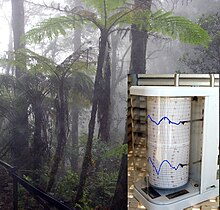
Relative Humidity (RH) is the amount of water held in the air as a percentage of how much could be held in fully saturated air at a given temperature. The possible amount of moisture held at a given time is directly related to temperature. Warm air can hold more water than cold air. Damage due to incorrect relative humidity occurs in conditions where high percentages (wet) and low percentages (dry) are present. High relative humidity can result in mold growth, salt efflorescence, rapid corrosion, and swelling of wood. Low relative humidity can result in cracking of wooden objects and embrittlement of paper and organic textiles.[9] Rapid fluctuations in relative humidity can also be damaging, as "Rapidly fluctuating temperature and relative humidity compound all of these effects."[10] Institutions should aim to keep the RH constant in exhibitions and storage areas because many organic objects expand and contract as both temperature and RH change.[11]
Some changes undergone by objects are reversible by adjusting the RH, but damage like cracks may be irreversible. Keeping the RH within an appropriate range for the type of material and as consistent as possible will prevent most RH based damage. Limiting storage and display spaces to between 40-60% RH will avoid most damaging effects, but maintaining a stable RH is considered more important than adhering to absolute ranges.[12] It is important to measure the RH of spaces regularly by using a number of tools including humidity indicator cards, thermo-hygrographs, hygrometers, psychrometers and data loggers. Once these data are being monitored, there are several ways to adjust relative humidity by using humidifiers, dehumidifiers, improving heating and air conditioning systems, and adjusting the temperature of the space.
Light
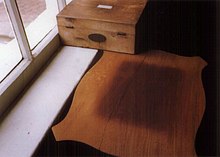
Light, as it relates to collections maintenance, is primarily concerned with the visual and ultraviolet light (UV) ranges of the electromagnetic spectrum. Both types of light can cause damage as "light radiation falling on a surface provides energy to induce chemical changes in the molecules of the material."[13] Damage from light, including loss of color and strength, is cumulative and irreversible. It is therefore crucial that light levels are monitored. In order to reduce the amount of light to which objects are exposed, several steps can be taken. Limiting the amount of time sensitive objects are put on display will help increase their lifespan.[14] Schedules for displaying and resting objects should be developed in consultation with a professional conservator. Light levels for light sensitive objects such as textiles, works on paper, and dyed leather should be kept at 50 lux or less, and at a maximum of 200 lux for more light resistant materials, such as oil paintings, bone, and natural leather. Some material types, such as stone, metal, and glass, are not negatively impacted by light levels, but "it is rarely necessary to exceed 300 lux."[15] Preventing light damage is difficult because light is necessary for visitors as well as people who are working with the objects. Exposure can be diminished by ensuring lights are only on when people are present, either by vigilant staff members turning on and off lights, timer switches or with motion sensors. Natural light from windows should be reduced or eliminated in all spaces by covering them with curtains, shades or UV absorbing filters.[16] Where lights are on frequently, such as in galleries and office areas, a light meter should be used at least once a year to determine how much light objects are being exposed to, and adjustments should be made accordingly.[6]
Contamination with pollutants and dust
Dust can contain a number of materials including skin, mold and inorganic fragments like silica or sulfur. It is important to keep collections free of dust whenever possible because it can become bound to a surface over time, making it significantly more difficult to remove.[17] Dust is hygroscopic, meaning it is able to attract and hold water molecules creating an ideal climate for mold spores to grow and cause biological damage.[18] Dust's hygroscopic nature can also prompt chemical reactions on a surface, especially upon metals. Inorganic dust particles may have tough sharp edges which can tear fibers and abrade softer surfaces if not properly removed.
The best way to prevent damage from dust is to control and prevent substantial buildup of dust in the first place. This can be done by using air filters in heating and air conditioning systems as well as using vacuum cleaners equipped with HEPA filters when possible. Care should be taken when wiping a clean cloth over a surface dusty with these inorganic particles because it may result in irreversible abrasions and vacuums should be used if soft surfaces are being cleaned. Limiting the amount of exposed surface areas of collections can also prevent dust from settling on objects. This can be done by storing objects in acid-free boxes, object specific enclosures, in drawers or covering open shelves with a polyethylene sheet.[16][18]

Pollutants in the storage environment atmosphere can also cause damage to material surfaces. In particular silver objects are vulnerable to sulphurous gasses which cause them to tarnish, and lead and pewter objects will corrode when exposed to volatile organic acids.[19] Vulnerable silver objects should be stored in enclosures either with activated charcoal or in silvercloth, "which acts as sulphur scavengers."[20] Silver objects can also be coated, or lacquered, with a clear barrier material such as Agateen No. 27 (cellulose nitrate) or Paraloid B-72 to prevent tarnishing, but these coatings require periodic reapplication. In order to avoid the presence of volatile organic acids, vulnerable objects should not be stored on wooden shelves or in wooden boxes.[21]
Pests

Damage from insects and other museum pests typically occurs because these pests are drawn to collections objects which they view as a food source. Certain material types, such as wood, organic textiles, furs, and paper are more vulnerable to insect damage than others.[22] Collections maintenance works to prevent infestations through a monitoring regime known as integrated pest management or IPM, and often involves a system of glue traps scattered throughout storage and display areas. This allows museum or repository staff to identify vulnerable locations, catch new infestations and identify the type of insect being trapped, and then act to eliminate the infestation.[22]
A range of possible treatments are available to address insect infestation. While in the past, application of chemical treatments was the preferred method, the risks they carry to human life and to the collection mean that they are rarely, if ever, used today.[22] Instead, non-chemical methods are preferred, and include freezing, controlled heating, radiation, and anoxic treatments.[22] Even options as simple as regulating the temperature and relative humidity of a space can be effective at curtailing an infestation, depending on the pest.[22] Each option has benefits and drawbacks, and the choice of treatment used should be undertaken in consultation with a qualified professional.[22]
Physical forces
Physical force, as an agent of deterioration, refers to any physical action upon an object that would result in damage. Examples range from large-scale events, such as earthquakes and building collapse, down to less readily recognizable issues, such as poor support or constant vibrations.[4]
In order to prevent accidental damage due to physical forces when moving and handling museum objects, objects should be carefully inspected before being picked up, paths should be kept free of obstacles or tripping hazards at all times, rolling carts lined with polyethylene foam padding should be used for moving objects, and "all steps of a procedure must be determined in advance".[23] In storage, objects should be housed where they are easily accessible,[24] and fragile objects should be well supported and stored in padded boxes or mounts. To prevent crushing, heavy boxes or other materials should not be placed on top of other boxes containing collections.
Fire

Collections maintenance works to prevent and minimize all risks of fire to the collection, including banning smoking, routine maintenance of fire extinguishers, and establishing and maintaining a system for the maintenance of smoke detectors (including a regular schedule of inspection, cleaning, and testing).[25] Protection against fire is best handled in blocking or preventing threats, and secondarily to mitigate the effects of these types of threats.[26] Collections maintenance also protects objects from fire damage with sprinkler systems, fire-proof or fire-resistant storage systems, and limiting other risks of fire throughout the facilities that could stem from electrical systems, combustible materials, and open flames.[27]
Water
Collections maintenance protects objects against all risks of water damage, and minimizes these risks throughout the facilities (both in storage and display areas for objects). Collections managers find and minimize sources of leaks, move objects away from leak sources and from direct contact with the floor, and install and maintain water alarms.[25] Risks related to water that collections maintenance must also be cautious of include locations that experience extreme weather conditions, faulty pipe or sprinkler systems, and the improper use of water during cleaning.[28]

Criminal, social unrest and war activities
Collections maintenance assists in maintaining the security and safety of each object. Collections are kept safe by assessment of risks within facilities, and protecting these objects based on their value, rarity, portability and/or accessibility by potential thieves or vandals. Collections maintenance professionals safeguard objects on display with locked cabinets, vitrines, or stanchions.[29] In storage, objects are protected inside vaults with locks and security systems, in addition to limiting and/or restricting access amongst staff members.[25] Despite being two distinct categories, man-made and cultural hazards are often grouped together. Man-made hazards include theft or vandalism, art theft or forgery, terrorism, and protest or war. Since these activities impact the integrity of a collection as well as the security of it, they are also considered cultural threats. Cultural hazards are changes that result in the destruction of important objects, locations, or ideals that define a region, people, or time. Art theft or forgery is also a common and financially detrimental types of hazard. According to the Smithsonian, these activities generate between $4 billion to $6 billion per year in stolen art and artifacts. Art fraud not only threatens individual works but can invalidate historical significance and challenge the legitimacy of an entire collection.
Custodial Neglect
Custodial neglect is a broad term that encompasses various scenarios which can result in damage to or loss of usefulness of an object. Examples of custodial neglect include a lack of environmental monitoring, abandonment of a collection to save money, loss of "documentation that gives value to an object or that confirms the museum’s right to ownership", or loss of location information which makes an object impossible to find.[30] Rigorous Information management protocols are necessary to ensure documentation is always accounted for, and administrative and/or public accountability can help maintain a high standard of collections maintenance and prevent damage or loss due to other forms of neglect.
Natural disasters
Natural disasters are unpredictable occurrences that are usually dictated by region and climate. These include weather conditions such as hurricanes, tornados, floods, blizzards, landslides, earthquakes or aftershocks, and sandstorms. These types of hazards can cause extreme structural and object damage to museums.
Other risks
Other risks, usually not covered by the risk management plans of cultural institutions, include staff misconduct In various aspects, issues related to funding and accounting, looted cultural property, or to activities of the national or local government, a donor, or even the institution's founder, as well as of various political, social, religious or media pressure groups, leading to unfair interference in the composition of institution's staff, an exhibition, or the entire collection itself, including pressure towards selection bias related to propaganda, discrimination or censorship attempts. Such risks may also precipitate personal changes in the management staff which may prove undesirable for the condition or governance of the institution. In extreme cases, the ultimate result may even be the liquidation of the institution.
Risk management plan
Building a risk management plan
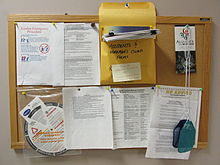
Museums will inevitably face an emergency situation either natural or man-made at some point and therefore will need to develop an emergency preparedness plan to mitigate risks to the collections objects and personnel within the museum. The primary objectives of emergency planning are to identify risks in order to anticipate and, if possible, to avoid emergencies; to retain control when an emergency occurs; and to mitigate potential damage as quickly as possible.[31] When an emergency plan is created, various stake holders within the institution should be consulted and upon completion, the emergency plan should be recorded and made easily understood and easy to implement with copies of the plan kept in different locations within and outside of the museum. In case of an emergency at the museum, the plan may not be accessible and therefore a copy of the plan can be obtained at an outside location. The emergency preparedness plan will need to be periodically reviewed and updated and staff will need to be drilled from time to time to ensure that in the event of an emergency, museum staff will be able to effectively carryout the established protocols spelled out in the plan.
Recently, the Northeast Document Conservation Center and the Massachusetts Board of Library Commissioners developed on online template that allows museums to input data that results in a customized disaster response plan called dPlan.
Risk assessment
Museums are advised to conduct annual risk assessments for their collection, building, and surrounding community. The purpose of the assessment is to determine what known factors present a danger to the institution and to try and predict unknown or unexpected factors in order to prevent future damage. Risk assessments help to inform the emergency preparedness plan and develop training for museum personnel. Part of the assessment is creating and maintaining an inventory of the collections to help prioritize objects, establish locations for storage, and form a more efficient response plan in case of an emergency.[32]
Insurance
To assist in the risk assessment of a museum, a detailed and flexible insurance policy is required to accommodate a specific or ever-evolving collection. Risks can be mitigated through an insurance policy that specifies the financial protection of previously assessed museum owned and loaned artifact, and any other property significant to the museum's mission. Agents generally assist a museum in identifying a monetary insurance limit based on the area's disaster and emergency history, as well as the probable maximum loss (PML) that is large enough to cover the worst-case scenario.[33]
While PML is another ideal policy, many museums can only afford to assess the risk for the probable maximum loss of an individual gallery or storage area, as well as any functions that extend beyond the shipping dock and front doors (i.e. items on loan, out for conservation, or at an off-site educational program). However, in the event an individual artifact is lost or damaged the previously appraised amount or the current market value will be considered during replacement or conservation. Realizing the unique specifications needed for an effective insurance plan with an insurance company which specializes in fine arts museums applications, declarations, and coverage.[34]
Risk prevention
On some level, emergency preparedness should dovetail collections maintenance (in museums) or preservation (in libraries and archives) practices in every institution.[35] Although many preventive measures are universal, certain measures can be performed by museum staff members to mitigate extreme damage to the collection, in both storage and exhibition areas.
Environmental monitoring occurs on a weekly or monthly routine depending on the exhibition schedule and environmental factors such as an influx of visitors in the summer heat. The following are museum-specific environments that are controlled yet still vulnerable:
- Storage areas are ideally kept between 40 and 60 degrees Fahrenheit with 40-50% relative humidity.[36]
- Exhibition galleries are exposed to light, fluctuating temperatures and humidity, dust, and other incoming particles that can damage the artifacts or exhibition materials. Temperatures normally linger between 64-77 degrees Fahrenheit and interior vitrines stay between 45-55% relative humidity.[36]
- Collections and exhibition departments coordinate to develop and enforce an integrated pest management system. Practicing good housekeeping skills, securing any degenerative props or artifacts on display and in storage, and disposing of pests, waste, or hazards accordingly assist in the mitigation of a pest infestation.[37]
This section should also address the institution's basic reputation management principles.
Integrated pest management

Pests pose a serious threat to cultural heritage. Whether they feed off of the composition materials or seek shelter within a collection, they can cause damage through actively dismantling or consuming objects, staining or dirtying them, weakening structures, or simply by attracting other harmful creatures. Pests that frequent collections can be grouped into four main categories: stored product and fabric feeders that feed on dry, organic materials; wood destroying insects; general feeders that may damage a variety of material types; and nuisances and health hazards, which may not be as harmful to collections, but are otherwise considered undesirable or risks to human health.[38] Commonly encountered pests from within these categories include insects, microorganisms, and rodents, but in certain locations birds, bats, lizards, and mollusks must be considered a threat as well.[39]
The approach to preventing pest infestation has changed quite a bit in the methodology employed. Where formerly fumigants and pesticides were applied directly to every collection, now more passive and less toxic means of pest management are favored. These newer techniques, termed integrated pest management (IPM), can be just as effective with careful and thorough planning. Different object materials are sensitive to different infestations, so a thorough material understanding of the artifacts to be protected and the pests resident to the area is required. Risks involving the collection building, constructive and decorative materials, and staff activities should be assessed, and a program should then be put in place which reduces these risks.[39]
The primary goal of IPM is to prevent pest infestations through careful planning. The simplest way to prevent pests from entering areas of concern is to keep the space uncluttered and sanitary. Additionally, holes or cracks in the building construction should be filled if possible, and deteriorating areas should be repaired or monitored carefully for breaches. All objects brought into the collection should be isolated for a time until it can be confirmed that no pests have traveled with the object. Regular inspections for signs of infestation should take place, and these should be well-documented to track any changes in problem areas and the effectiveness of the system in place.[39] Careful monitoring of environmental conditions within the building, such as those outlined above, can also be implemented to deter pests from entering the facility or discourage them from flourishing should they gain access.[40]
If an infestation does occur, the response must consider the safety of the cultural material involved. Individual objects can be quarantined through bagging to either contain or prevent infestation. Effective treatments include fumigation, freezing, or pesticides; cost may be the major deciding factor, based on the infestation and the institution.[39]
Risk mitigation
Building (Storage and Exhibit Galleries) Alterations:
- Automatic shut-off of gas, sewage, electricity, and water lines. In addition, automatic shut-off of main breakers and fuses to prevent back-feed electricity when starting a generator during the response and recovery process.
- Fire safety self-inspection for cultural institutions,[41] and an accompanied inspection by fire personnel to ensure proper fire safety by staff and adequate security for fire risks [1]. This includes coordination with both the Design and Handling aspects of exhibitions and storage as to not compromise human and object emergency routes.
- Valuable items are kept in concrete storage to minimize spread of fire or damage. Items are compartmentalized to deter fire and water incursion. Also in concrete basement storage is hanging artwork stored on sliding metal racks. To mitigate flood damage, painting are hung 2 ft. above the track.
- Textiles are kept in one storage room to prevent fire spread. Kept hanging off the ground by 2 feet, in the middle of the room, and covered overhead by other industrial shelves to minimize water damage from sprinklers.[42]
- Furniture is kept off the ground on shelves and palettes. Any objects close to the ceiling are covered in low-density, polyethylene plastic sheeting to prevent any water damage from automatic sprinkler systems.
- HOBO's[clarification needed] or any relative humidity and temperature data loggers with plexi-glass casings are in every storage and exhibition area, subject to formal, periodic, and documented calibration.
- Increased use of vitrines and plexi-glass covers for objects made of organic materials (leather, rawhide, straw, bone, shell, and ivory), textiles, and documents (including photographs).
- Utilizing quick release systems for mounts to easily move objects in case of damage.
- Use of safe plastics and fabrics for exhibition.[43]

The plan of a respected and renowned institution should include procedures related to crisis management and crisis communication in order to protect the institution's reputation in case of a public relations crisis.
Various contingency plans should also be included.
Emergency preparedness
Resources and personnel
Preparedness for personnel includes providing museum staff with emergency training and predetermined designated responsibilities.[44] Collections and exhibition personnel fully inventory all collections and upload it to the museum's Collections Management System. Updates are generally made at least every 72 hours. Duplicate copies of the database reside off-site and in fire-proof cabinets in the Collections, Curation, and Administration departments. Cabinets are also equipped with Disaster Kits containing safety goggles, flashlights with batteries, nitrile, cotton and fireproof gloves, disposable respirator masks, a medical kit, disposable cameras, large and small tarps, heavy packing blankets, hurricane plastic, markers and paper, artifact identification tags, and emergency and insurance personnel information (all of which are retrievable upon re-entry to minimize any rented or bought materials). If possible, exhibition galleries, hallways, lobbies, and offices are functionally decorated with hinged-lid benches that contain an Evacu-Trac Emergency Evacuation Chair. In the event of an emergency, elevators are not safe and any disabled staff member or visitor will need to be able to evacuate down the stairs. Strategically placed near exits and spaced along the designated evacuation routes, the collapsible chair has a low handle height, is lightweight, and has a fail-safe brake so that anyone can assist this person.[45]
Policies and procedures
In an attempt to maintain control of any emergency, the policies and procedures in the emergency plan outlines the individual, team, and contracted services chain of commands, documentation requirements, and salvage priorities. Policies and procedures form from analyzing and discussing the following elements of a potential emergency:
- Research and assessment of potential risks and hazards. This might include a conservation survey of the collection and building conducted by museum collections and conservation staff, or authorized contracted personnel. Rank risks according to likelihood of damage and prepare for the worst-case scenario for all disasters.
- Resource information about approved contracted services, vetted storage facilities, and emergency first-responders (including museum-specific responders). In the event emergency authorities restrict access for any amount of time, a museum should be equipped with some kind of off-site planning and response headquarters. This can be an approved storage unit with attached room for an office, or a neighboring museum.
- Develop collection salvage priorities before they are damaged. Priorities will help guide the museum in pulling together a plan for handling different types of collection materials, as well as towards a partial collections survey. *Include copies of collection incident forms to determine if any damage had already occurred and was not disaster related.
- Identify which staff members are responding to what disaster or emergency and what their initial responsibilities would be.
In order to maintain a working knowledge of emergency planning and preparedness, a notebook and digital file containing the following are kept on- and off-site:
- Most recent collections survey.
- An approved and up to date emergency response plan for the museum.
- Information regarding emergency response teams, such as responsibilities and initial procedures.
- Location specification of Disaster Kits within the museum. A chart detailing the location, what materials are located there, and if there are any handling instructions or additions needed to perform a task.
- Emergency Plan Exercise Evaluation Forms that document the staff's previous attempts and progress when practicing emergency response procedures.
- List of approved expertise and services; such as other conservators, heating/cooling rental companies, and storage facilities.
Training
To ensure continuous staff training, mock disasters and quizzes are routinely conducted.
Plan verification and validation
Once a draft is completed, it is made available for the entire staff for control self-assessment, which may be followed by quality assurance and quality auditing.
Plan evaluation
Periodically, museums will reevaluate their risk management plan to account for changes in location or personnel, the addition or subtraction of objects from the collection, and other modifications impacting the institution's prevention, mitigation and preparedness strategy.
Emergency response plan
The initial hours and days after an emergency has occurred are the most critical for mitigating damage, and preventing any further damage from occurring during recovery efforts. The welfare of staff and visitors is the primary concern during an emergency, and their safety must be ensured first and foremost.[46] The best response is executed by following the prescribed emergency response plan, remaining safe and calm, and acting deliberately.
Notify museum personnel
Immediate action is taken within the first 48 hours to stabilize the environment, assess the damage, and report conditions and recommendations. Staff must be notified of the emergency so that they may act in accordance with the museum's emergency preparedness plan, including consciously looking for hazards during an evacuation and notifying the appropriate museum associated and non-museum associated personnel.[46] The following are examples of personnel to contact before or upon re-entry into the museum:
'Museum Associated Personnel'
- Museum insurance company and agents for the building and collections should be contacted immediately with any available information and photographs of the incident.
- Any museum, organization, or private lender with loaned items in exhibition spaces, and possibly storage, will be contacted; specifically any items that are rare, fragile, or flammable, in which damage would be devastating.
- Any museums that have been scheduled to receive any of our objects for exhibitions within the next 6–12 months must be contacted in anticipation of exhibition schedule changes.
- Museum staff emergency response teams should be notified immediately. Anyone who cannot participate must find an alternate, pre-approved staff member to fill their place ASAP.[47]
'Non-museum Personnel' Any pre-approved disaster response and salvage organizations or contracted companies are also made aware early of the possibility of assisting the museum. It is important to initially contact the following before and after the re-entry and damage assessment to ensure necessary and cost effective assistance:
- A media liaison, museum employed or not, to provide a press release disclosing the incident and asking for cooperation to secure the area from visiting patrons. Any tour groups scheduled must be notified.
- Initially contact the 24-hour AIC CERTS service, 202-661-8068, to request a collections emergency response team that will coordinate efforts with first responders, state agencies, county facility workers, vendors and the public to secure assistance for disaster relief.
- Neighboring museums and conservation labs are a great, and often cheap or free, resource for skilled and untrained volunteers, supplies such as HEPA vacuums specifically designed to remove soot and chemical residue from fire extinguishers, and replacement objects for disrupted exhibits.
- Contact service providers for a generator, new security system, drying systems (fans/air pumps), clean water, and freezer services.
- Contact local truck rental company to receive a quote for an additional regional transport vehicle with standard features of climate control, AC, lift gate, possibly secured shelving, and a security system in the event you need more than your own museum vehicles.
- Note: Any contracted service will be required to sign a Disaster Recovery Contract the details the scope and nature of the contracted work, any biddable security measures, any equipment rentals, transport or labor, and terms of contract that are in accordance with the museum’s mission.
Documentation
To determine the level of damage, the staff teams are prepared to systematically assess collections and exhibitions damage and provide remedies that will reduce recovery time. Small museum personnel teams consist of various combinations of registrar (museum), curators, conservators, and exhibition designers and art handlers. The teams are sorted by their involvement in either the type of collections on display or due to their participation on the initial exhibition team. If this is not known at the moment, off-site back-up information might need to be consulted. Each team has a leader that reports to the emergency response ‘project manager’ who is most likely a conservator, collections manager, or head curator. If applicable, an objects and/or textile conservator can start with the exhibition with the most either loaned or vulnerable objects.[5]
Documentation will be taken by all teams to record the physical and intellectual damage to the collection and exhibitions before and after any moving or handling.[44] Teams discuss immediate recommendations for the exhibition's resurrection; such as in-house object replacements, probability of reproducing panels, barriers, and cases, and security systems, and compiled into a report which includes:
- Exhibition gallery structural damage and how it might affect the quality of the artifacts. An Environmental Monitoring Form is used to take relative humidity and temperature measurements every four hours.
- Object information: Accession number, category, description, materials or medium, any credit line, measurements if possible, donor/lending institution information if possible, location within the gallery space, any protective covering or mounting, and most importantly, the condition of the object.
- Also, note any continued interaction with the damaged elements. For example, soot and ash can be removed with a HEPA vacuum and dry sponges, but interaction with water can cause sticky residue that will be hard to remove in the long run. Other signs of deterioration or mold should be documented.
- Any treatment and storage recommendations for the damaged artifacts. Treatment priority is categorized by ‘Urgent’, ‘Serious but Not Urgent’, ‘Treatment for Long Term Preservation’, ‘Treatment for Exhibition’, and ‘Good Condition’. If the artifact is relocated, documentation must be made of how it was packed and moved, and then where its temporary location will be.
- Photographs will be taken by all recovery teams as well as by the staff photographers. Photographers should be utilized by teams to document any extensive or significant damage.
- In addition, detailed notes about how the disaster occurred and how it can be prevented in the future.
Assessment
Museum staff must cooperate with each other during the initial assessment of damages, which includes identifying any hazardous materials or circumstances, and proceeding with salvage priorities. Therefore, each response team reconvenes to share damage data and recommendations with the director, deputy director, development officer, financial officer, PR/marketing officer, and related staff to determine the appropriate supplies, assistance, and funding needed. Generally, a Rapid Collections Assessment is conducted by each team and then approved by the project leader to use for insurance and to create a salvage priority list and exhibit rehabilitation timeline. Completion of the assessment calls for the re-communication with:
- Museum insurance representatives and risk manager for the collections and building. We may need an on-site evaluation to accompany the collections assessment.
- Specialized services, state and local workers, and neighboring museums to acquire the appropriate equipment and labor needed (museums are a great source for cheap or free archival packing and shipping supplies)
- Lending museums of objects and exhibitions, as well as any institutions we plan to lend to future to divulge any pertinent condition reports.
- Security company to make repairs to the building to ensure worker and collection safety.
Staff teams constantly work to identify any hazardous materials that could hinder the response and recovery process, for both the objects and personnel involved.[48] Teams will receive this list to ensure safe handling and maneuvering when stabilizing the building and collection.

Stabilization
Armed with the documentation such as a Rapid Collections Assessment, and Artifact Salvage and Exhibition Rehabilitation Timelines, teams formulate and implement a plan to stabilize and recover the building, exhibitions, and artifacts. Although safety hazards surrounding material removal and interactions can cause issues, flexibility and periodic re-assessment is essential.[49] There are many online resources that specify how to stabilize and continuously care for objects that have been damaged by material and condition. The AIC's new blog, CoOL, archives individual articles on how to salvage artifacts by material, as well as a 'Find a Conservator' page.[50]
Retrieval
The following precautions should be taken by all involved to minimize personnel injury and collection damage:
- Identify and safely attempt to repair or remove structural hazards to either the collection or personnel.
- Facilities, Security, and Custodial departments coordinate with the Collections teams to determine what debris or damaged items can be cleaned up and what are actual remnants of objects.
- If able to, adjust temperature and relative humidity to prevent mold outbreak, cracking, expanding, or shrinkage.
Protection
To further stabilization, teams:
- Leave undamaged items in place if the environment is stable and secure. If not, they must be moved to a secure, and environmentally controlled area; whether in an in-house or contracted conservation labs, or in off-site storage.
- If no part of the building is dry, protect all objects with polyethylene plastic sheeting.
- Give priority to those items on loan when moving objects.
- Isolate any items with mold and handle with extreme care, as to not transfer spores.
- Retrieve all pieces of broken, melted, or singed objects. Depending on size and severity of damage, place pieces in polyethylene bags or acid-free boxes with acid-free tissue or Versapak as a buffer.[49]
Salvage
It is recommended that all salvage priorities be set prior to an emergency and to have those priorities clearly documented and labeled in the museum’s emergency response plan. Some basic rules for salvage recovery are as follows:
- 1. The health and safety of staff, visitors and emergency personal is more important than the collection worries.
- 2. Salvaging the objects in the affected/damaged areas are the next priority.
- 3. It is recommended that the objects in an affected/damaged area be classified as high, moderate and low priority objects. The most commonly used criteria for classifying object are artefactual value, associational value, informational value, evidential value, administrative value and monetary value, risk and usage. It is recommended that each museum value their collections as they see fit by scoring each object on value, risk and usage then determining if that object is low, moderate or high priority.
- 4. The Occupational Safety and Health Administration requires all work sites including emergency salvage sites to have the following:
Bathroom accommodations, washing facilities with a clean water supply, a sound structure, ground fault circuit interrupters on outlets, handrails for stairways with more than 4 steps, no refuse or toxic chemicals, no asbestos, no lead paint, no mold and no pesticides and or chemicals so it is recommended that the emergency salvage sites be picked and vetted prior to an emergency.[51]
Options for funding recovery
All too often enough, finding the funding to recovery can be difficult but addressed in several creative ways. The traditional ‘ask’ from donors is a great start. However, collaborating museum education, curation, public relations, and conservation personnel could launch "Adopt an Artifact". Groups or individuals gradually sponsor the conservation of any damaged artifacts or exhibits. Appreciations would be made accordingly with an exhibit label or dedication ceremony. Similarly, a "Resurrection" gala could highlight certain artifacts that need to be conserved while raising funds for said artifacts at a one time, give all event. Another option is to increase the museum employee discount for the museum store (if applicable) from 20% to 25%, for example. All of the proceeds from the store can go directly back into the acquisition of items to replace damaged or lost artifacts. Social media has also played a large role in getting the digital community involved in mobilizing recovery efforts.
NDCC Funding Opportunities for conservation and salvage http://www.nedcc.org/free-resources/funding-opportunities/overview
| This article uses material from the Wikipedia article Metasyntactic variable, which is released under the Creative Commons Attribution-ShareAlike 3.0 Unported License. |